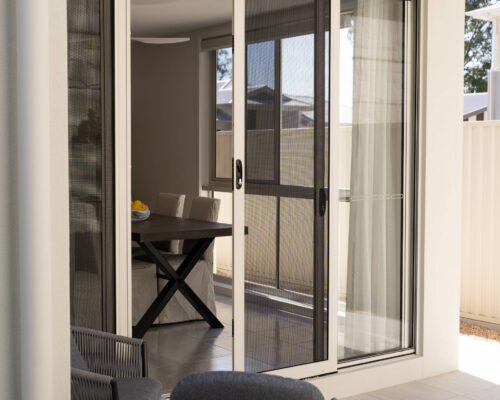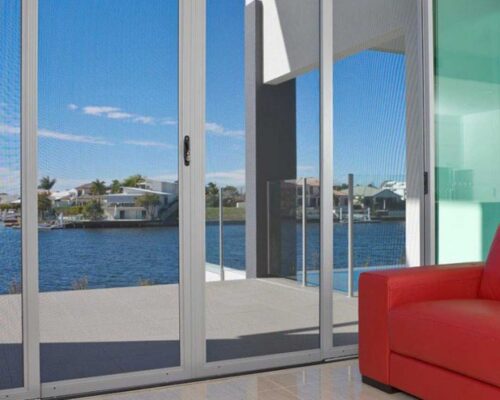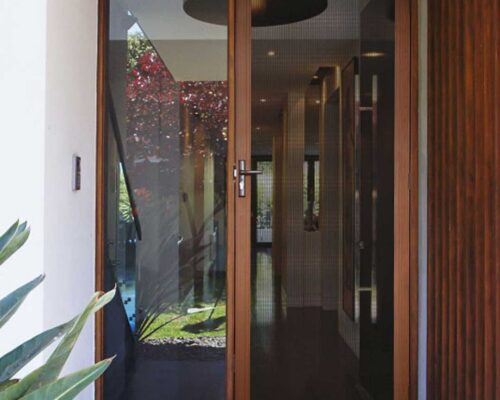
Most security doors look secure once they have been installed. They may have stainless-steel mesh, a solid frame, and a lock that feels reassuring when it closes. From the outside, it can be difficult to tell whether an item is a certified security screen, a lower-priced barrier screen, or a security product that has not been installed correctly.
That distinction may not matter to every customer. Someone wanting insect protection and a visible deterrent may be perfectly happy with a barrier screen. However, if the purpose of the door is to secure a main entry point, it is worth knowing what has actually been tested—and whether the complete installation allows the product to provide that protection.
The newer AS 5039 classifications make this easier to understand, but terms such as SL100 and SL200 are still unfamiliar to most property owners. In this guide, we explain what those ratings mean, where barrier screens such as Diamond Grille and BasiX fit, and why locks, hinges, interlocks, and fixings can matter just as much as the screen itself.
Screens Plus supplies each of the products compared in this guide. Our recommendations are based on what you need the screen to do and the level of security required for that particular opening.
In This Guide
- The question this guide will help you answer
- The first decision: what does the screen need to do?
- When a barrier screen may be enough
- When a tested security classification matters
- A quick comparison of the Screens Plus range
- What does a tested security screen actually prove?
- Why two similar-looking doors can perform very differently
- What should labels and paperwork tell you?
- What happens if a pet door is added?
- Choosing the right level of Security for your property
- Questions worth asking any security screen supplier
- Frequently asked questions
- The bottom line
The question this guide will help you answer
Do you need a lower-cost screen that provides insect screening, airflow, and a visible barrier—or a tested security system for an entry point where preventing forced access is the priority? Both can be sensible purchases, but they are not the same product.
The first decision: what does the screen need to do?
The words “security screen” are often used for almost any strong-looking mesh or grille fitted over a door or window. In everyday conversation, that is understandable. Under the Australian Standards, however, a security screen is a tested and classified product. A barrier screen may still look substantial and perform the job a client wants, but it does not carry the same security classification.
This is not a contest between a good product and a bad one. It is a choice between different purposes. Price, appearance, airflow, insects, privacy, fall prevention, and the importance of the opening all affect what represents good value for your household or property.

When a barrier screen may be enough
For a window, laundry door, or lower-risk opening, the main objective may be airflow, insect screening, or a visible deterrent. In that situation, paying for a formal security classification may not be the buyer’s priority.
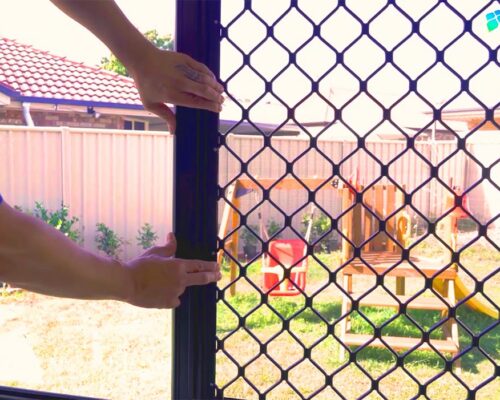
- Diamond Grille is the entry-level barrier option in the Screens Plus range. It is affordable and creates an obvious physical obstacle, although the grille is noticeable from both inside and outside.
- BasiX is also a barrier option and can provide fall prevention when manufactured and installed in the appropriate configuration. Its stainless-steel mesh gives a clearer outlook than Diamond Grille and it sits below SecureView in price. That combination is why BasiX has been receiving strong interest.
A BasiX door can be ordered with a triple lock. The extra locking points may improve how the locking side is held, but they do not turn BasiX into an AS 5039 security screen. Classification belongs to the complete tested system; it cannot be created by adding one component.
When a tested security classification matters
The value of a classified security screen becomes clearer when the opening is a main access point and preventing forced entry is the reason for buying the door. Front doors, side entries, and large sliding openings are common examples.
At these locations, details that may not concern a barrier-screen buyer become central to the result: three-point locking, hinge numbers, frame gaps, interlocks, anti-lift adjustment, fixings, and the strength of the material supporting the door. The screen is no longer simply filling the opening; it is intended to secure it.
A quick comparison of the Screens Plus range
| Screen Option | Classification | Where It May Fit |
|---|---|---|
| Diamond Grille | Barrier screen | The most affordable option in this range. Provides insect screening and a visible deterrent, but is not supplied by Screens Plus as an AS 5039 security screen. |
| BasiX | Barrier / fall-prevention option | A cleaner outlook than Diamond Grille and lower pricing than stainless-steel security mesh. It can provide fall prevention in an appropriate configuration. A triple lock does not change its classification. |
| Xceed | Security screen; SL100 | Perforated aluminium can provide more daytime privacy. Screens Plus recommends comparing its price and impact classification directly with the SL200 option. |
| SecureView | Security screen; SL200 | The standard Screens Plus recommendation when a customer wants a tested security product, a clear view, and a triple lock as standard on doors. |
| SecureView Saltwater Series | Security screen; SL200 | For high-corrosion coastal environments where extra protection for the frame and components is important. |
What does a tested security screen actually prove?
The appearance of the mesh alone cannot answer that question. AS 5039 assesses the complete security-screen system, including the frame, infill, retaining method, lock, hinges, and other components in the tested configuration.
Depending on the product and configuration, testing considers resistance to dynamic impact, jemmying, pulling, probing, knife attack, and corrosion. A product that passes is not being described as impossible to breach. It has demonstrated measurable performance under a recognised and repeatable test program.
The current AS 5039 suite separates this into three related parts:
- AS 5039.1:2023 covers classification and performance requirements for security door and window screens.
- AS 5039.2:2024 covers installation requirements. Amendment 1 was published in 2026, so the current amended edition should be used.
- AS 5039.3:2023 sets out the test methods used for security door and window screens.
Product and installation answer different questions
The product classification tells you what the approved screen system achieved in testing. The installation determines whether that system has been connected correctly to the building. A genuine security outcome relies on both.
SL100 and SL200: what changes?
| Rating | Dynamic Impact Test | What It Means For You |
|---|---|---|
| SL100 | Five impacts at 100 joules | A tested security classification, but at the lower dynamic-impact level. |
| SL200 | Five impacts at 200 joules | The higher dynamic-impact classification. It provides a stronger tested system when the product is made and installed in the approved configuration. |
An SL200 security screen is tested with five impacts of 200 joules—twice the impact energy used to test an SL100 screen. This demonstrates substantially greater impact resistance in the tested security-screen system.
Correct installation is essential for achieving that protection. The frame, tracks, locks, hinges, interlocks, and fixings must connect the SL200 screen securely to the existing opening.
Screens Plus supplies Xceed at SL100 in the configurations we currently use, while SecureView and SecureView Saltwater Series are SL200. Xceed can suit a resident who prefers the daytime privacy of perforated aluminium or wants to match existing Xceed screens. However, the price difference is often small enough that we recommend comparing its SL100 classification directly with SecureView’s SL200 classification before deciding.
For clients who specifically ask for security, SecureView is normally our recommendation. It provides the higher SL200 impact classification, stainless-steel mesh for visibility and airflow, and a triple lock as standard on doors. SecureView Saltwater Series carries the same SL200 classification with additional corrosion protection for coastal properties.
Why two similar-looking doors can perform very differently
Imagine two security doors fitted across similar openings. Both have stainless steel mesh, an aluminium frame, and a lock in the same position. From across the room, they may look almost identical.
One door may have the correct triple lock, enough hinges, tight clearances, and fixings that bite into sound material. A sliding version may be properly interlocked and adjusted so it cannot be lifted from its track. The other may close neatly while missing several of those details. The difference is difficult for a customer to see, but it becomes important when the door is placed under pressure.
A tidy installation is not automatically a security installation
A door can open, close, and look perfectly acceptable while still having weaknesses in its locking, hinges, interlocks, rollers, fixings, or supporting frame.
The triple lock: important, but not the whole system
A triple lock secures a door at the top, centre, and bottom of the locking side. This helps stop the upper or lower corner from being pulled or levered away from the frame. It is an important part of a compliant security-door configuration and is standard on SecureView doors supplied by Screens Plus.
The lock cannot do the job alone. Adding a triple lock to a barrier door does not make the mesh retention, frame, hinges, or installation comply with AS 5039. This is why a triple-locked BasiX door remains a barrier product.
What we look for on a hinged security door

The hinge side needs to support the size and weight of the door and resist being pulled away from the opening. Screens Plus uses the following working hinge policy:
- Three hinges for doors up to 950 mm wide.
- Four hinges for doors over 950 mm and up to 1150 mm wide.
- Five hinges for doors wider than 1150 mm.
This is our installation policy rather than a claim that one hinge count suits every opening. Door height, weight, wind exposure, frame condition, and manufacturer requirements can also affect the final specification.
We also aim for gaps of no more than approximately 4 mm around a hinged security door where the opening allows. Tight, even clearances reduce the space available for a screwdriver or crowbar while still allowing the door to operate and latch correctly.
What we look for on a sliding security door
On a sliding door, the interlock is an integral part of the security system. It connects the closing edge of the security screen with the fixed glass-door frame so the two cannot simply be pulled apart. Screens Plus omits an interlock only when the product is being installed as a flyscreen rather than a security door.
The rollers also contribute to the result. Bottom rollers establish the door height and lock alignment. Once the door is set correctly, the top rollers are adjusted and locked off to restrict the panel from being lifted out of the track.
Residents sometimes want to remove a sliding door for cleaning. We advise against removing a security door unless necessary. If it must be removed, only the top rollers should be loosened. Changing the bottom rollers can alter the lock height and alignment, so the door should be reset and checked after refitting.

The opening behind the door also matters
Fixings need enough length and quantity to bite into sound supporting material. Where an existing jamb, frame, or track is not adequate, we may use additional or different fixings, aluminium angle, extra tracking, or other reinforcement to create a stronger mounting surface.
These additions are not cosmetic extras. They may be what allows the security door to connect properly to the building. Installing a strong screen into weak or unsuitable material does not give the buyer the protection they expected from the product.
Installation weaknesses property owners may not notice
Most clients will not dismantle a lock, measure the depth of a fixing, or know how far an interlock should engage. These are some of the practical issues we look for when inspecting an opening or an existing installation:
- Insufficient hinges for the size and weight of a hinged door.
- Excessive gaps around a hinged door that leave room for a levering tool.
- Single-point locks where the security configuration requires a three-point system.
- Missing interlocks on sliding doors, or interlocks that do not engage correctly.
- Loose top rollers that fail to restrict lift, or misaligned bottom rollers.
- Substandard screws that are too short, too widely spaced, or fixed into weak material.
- Weak tracks or jambs that have not been reinforced before the screen is fitted.
This is not intended to suggest that every older installation is unsafe or to criticise another installer over minor differences. If Screens Plus finds a weakness that materially affects the proposed installation, we explain the issue and the reinforcement or correction required.

What should labels and paperwork tell you?
A security screen should be identifiable as the classified product that was supplied, and the installation should be completed and documented in accordance with the current installation requirements. This helps separate a tested product from a screen that simply looks strong.
SecureView and SecureView Saltwater Series SL200 doors supplied by Screens Plus carry the manufacturer’s product label. Property owners should also ask how the installation will be identified and documented, because a product label on its own does not confirm that the installation requirements have been met.
A useful question before accepting a quote:
“What exact product and classification are being supplied—and how will the installer show that the locking, hinges, interlocks, fixings, and supporting opening have been dealt with correctly?”
What happens if a pet door is added?
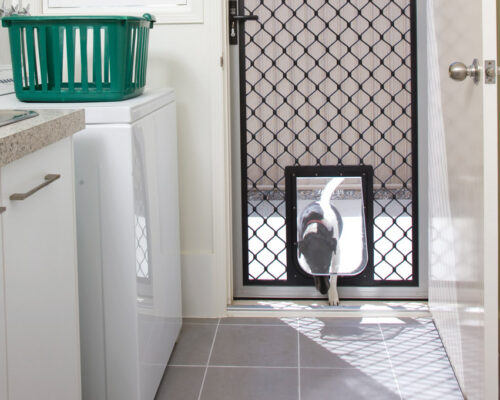
Adding a pet door requires the tested mesh or infill to be cut and modified. The completed door therefore no longer retains its original AS 5039 security classification, even when the surrounding door began as a classified security product.
That does not mean a resident can never choose a pet door. It means the convenience and security trade-off should be understood before ordering. The installer should explain the available locations and sizes, whether a person could reach or pass through the opening, and the effect the modification has on the door.
For a more detailed explanation, see our guide to pet doors installed in security and flyscreen doors.

Choosing the right level of Security for your property
The clearest decision usually comes from starting with the opening rather than the product name. Consider these questions:
- Opening location: Is this a main access point, a side entry, a window, a patio door, or simply an insect-screening location?
- Primary objective: Is preventing forced access the priority, or would a lower-cost physical barrier meet the objective?
- Visibility and lifestyle: How important are visibility, airflow, and daytime privacy?
- Safety standards: Is fall prevention required for the particular window and configuration?
- Environmental factors: Is the property close enough to the coast to justify a dedicated salt-resistant product system?
- Structural integrity: Does the existing jamb, frame, or track need reinforcement?
- Future modifications: Will a pet door or another modification be added?
For insects, airflow, and a visible or modest deterrent, Diamond Grille or BasiX may be entirely appropriate. When a customer wants a tested security product over an entry point, we normally recommend comparing Xceed’s SL100 configuration with SecureView’s SL200 classification, appearance, and price. In most cases where security is the stated priority, SecureView is our preferred recommendation.
For a broader comparison of costs, see our security screen prices on the Sunshine Coast. For help matching a product to the opening, see how to choose security screens for your home or property.
Questions worth asking any security screen supplier
- Product type: Is this product a barrier screen or a security screen under AS 5039?
- Exact rating: If it is a security screen, is the supplied configuration SL100 or SL200?
- Lock style: Does the quoted door include a triple lock?
- Sliding doors: How will the interlock and anti-lift adjustment be completed?
- Hinged doors: How many hinges will be used and how will the gaps be controlled?
- The final result: What fixings and track reinforcements are included to anchor the door securely to the building?
Frequently asked questions
Is BasiX a security screen?
No. The BasiX products supplied by Screens Plus are barrier and fall-prevention products rather than AS 5039 security screens. They can still be a good choice where appearance, insect screening, fall prevention, and price are the main considerations.
Does a triple lock make a barrier door a security door?
No. A triple lock is important, but classification applies to the complete tested system. Adding a triple lock to BasiX does not change its barrier classification.
Is SL200 burglar-proof?
No security screen should be described as impossible to breach. SL200 is the higher dynamic-impact classification under the current standard. It provides independently testable evidence of performance when the approved product is manufactured and installed in the correct configuration.
Is SL100 still a genuine security classification?
Yes. SL100 is a security classification rather than a barrier classification. It represents a lower dynamic-impact level than SL200. Buyers should compare the complete product, price difference, appearance, installation, and documentation supplied.
The bottom line
The most important distinction is not stainless steel versus aluminium or one product name versus another. It is whether the property occupier or owner wants a barrier or a tested security system—and whether the quoted product will be installed in the configuration that earned its classification.
A good quote should make those differences clear. It should identify the product and classification, locking, installation method, any required reinforcement, and any modification that changes compliance. That allows a customer to compare genuine differences rather than relying on the appearance of the mesh or the reassuring sound of a lock closing.
If you would like help deciding which level suits your opening and budget, book a free measure and quote with Screens Plus Sunshine Coast. We can inspect the opening, explain the classification, and recommend an option without presenting every screen as though it provides the same level of security.