Choosing a security screen is about more than selecting a mesh style or colour. The right product should suit your home, preserve the views and breezes you enjoy, and provide a genuine level of protection when it is properly measured, manufactured and installed.
The Sunshine Coast also presents some particular challenges. Salt air, humidity and weather exposure can affect materials and hardware, while large sliding doors and modern architectural openings often require more than a standard installation.
This guide explains how to compare your options, what the Australian Standards mean, and the installation details worth checking before you accept a quote.
In This Guide
- Start With What You Need the Screen to Do
- Understanding the Difference Between Security and Barrier Screens
- What Does SL200 Mean?
- Choosing a Screen for Views, Airflow and Security
- Choosing Screens for Coastal Homes
- Why Three-Point or Triple Locks Matter
- How Many Hinges Should a Security Door Have?
- Check the Gaps Around a Hinged Door
- What to Look For on a Sliding Security Door
- Common Installation Problems Customers May Not Notice
- Why Accurate Measuring Matters
- Questions to Ask Before Accepting a Quote
- The Right Screen Should Perform and Look Good
- Need Help Choosing the Right Screen?
- Frequently Asked Questions
Start With What You Need the Screen to Do
Before comparing brands or prices, think about what matters most for your home.
You may want to:
- secure an entry while allowing natural airflow;
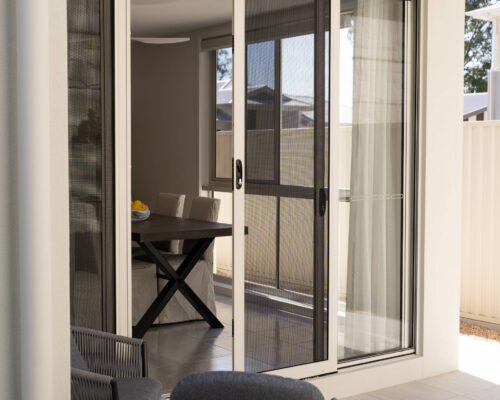
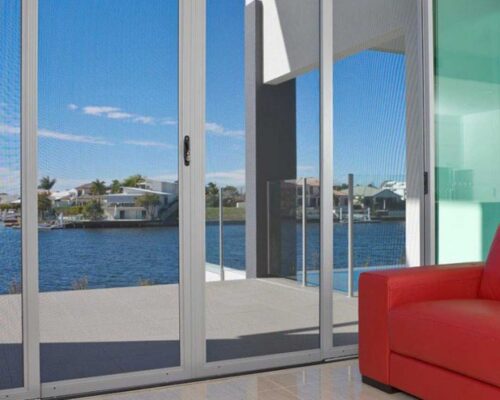
- protect a view through a sliding or stacker door;
- choose materials suited to a coastal environment;
- add security without making the home feel enclosed;
- match a modern architectural style;
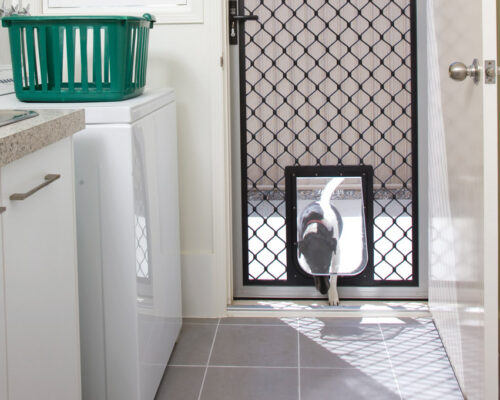
- provide a practical solution for pets or family access; or
- improve an older door that no longer locks or operates properly.
The best choice will depend on the opening, its exposure and how you use that part of the home. A product that suits a sheltered inland property may not be the best option for a home exposed to strong salt air.
Understanding the Difference Between Security and Barrier Screens
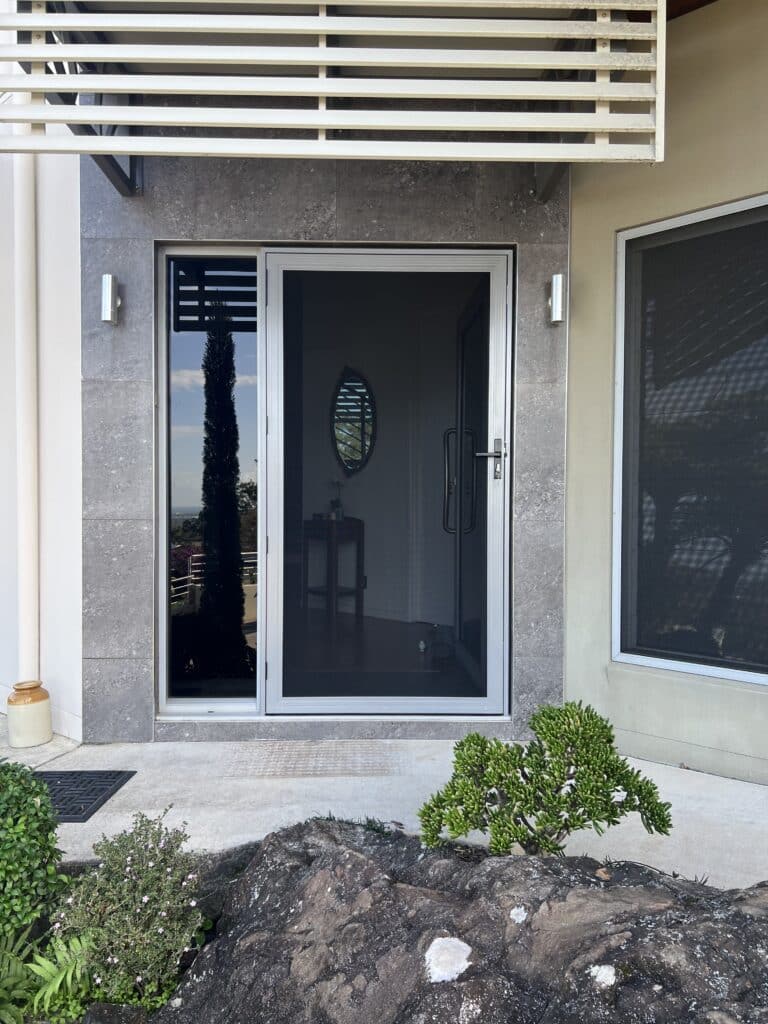
Not every strong-looking screen is an Australian Standards-compliant security screen.
A genuine security screen is manufactured and tested as a complete system. The mesh or infill, frame, retention method, hinges, locking system and other components must work together to meet the required performance tests.
Barrier screens and insect screens can still be useful products. They may provide insect protection, privacy or an added physical barrier, often at a lower price. However, they should not be confused with a tested security product.
Screens Plus clearly distinguishes between its security-rated products and products such as Basix, which is offered as a barrier screen rather than an Australian Standards security screen.
What Does SL200 Mean?
The current Australian Standards divide security-screen requirements into three areas:
- AS 5039.1:2023 covers classification and performance.
- AS 5039.2:2024 covers installation.
- AS 5039.3:2023 covers the methods of test.
SL200 means Security Level 200. To achieve this classification, a security-screen system must withstand five dynamic impacts of 200 joules while remaining secure within its frame.
Dynamic impact is only one part of the testing. Security screens must also meet other applicable tests designed to assess resistance to common methods of forced entry, including levering, pulling, probing and cutting.
The Australian Standard is a benchmark, not a marketing competition. A product either passes the required testing for its classification or it does not. Once a system achieves SL200, a larger figure from a different private or marketing test does not give it a higher Australian Standards classification.
Screens Plus security-rated screen and door systems are tested to SL200 and are supplied with the applicable compliance identification.
Compliance labels are important, but a label alone cannot guarantee that every individual door has been measured, fitted and adjusted correctly. The completed installation still matters.
Choosing a Screen for Views, Airflow and Security
A security screen does not need to make your home feel dark or enclosed.
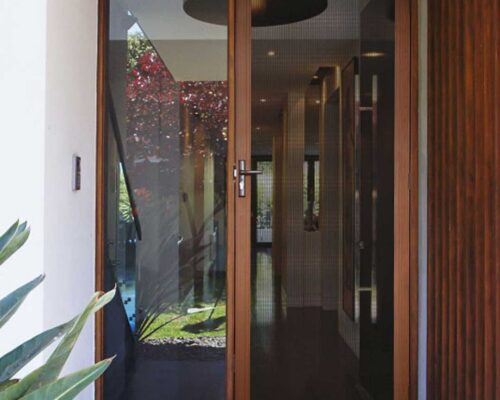
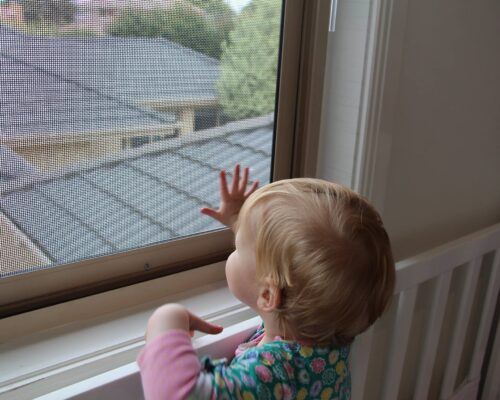
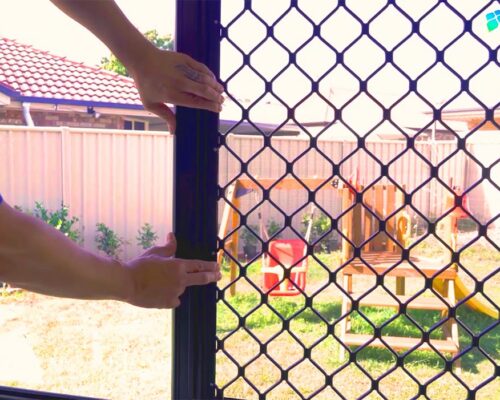
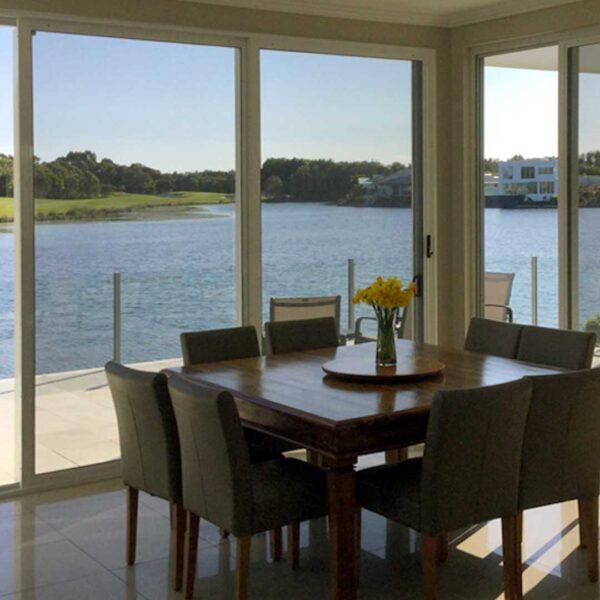
Premium stainless-steel mesh screens provide strong security while maintaining outward visibility, airflow and natural light. This makes them particularly suitable for Sunshine Coast homes where owners want to enjoy open doors, sea breezes or hinterland views without leaving an entry unprotected.
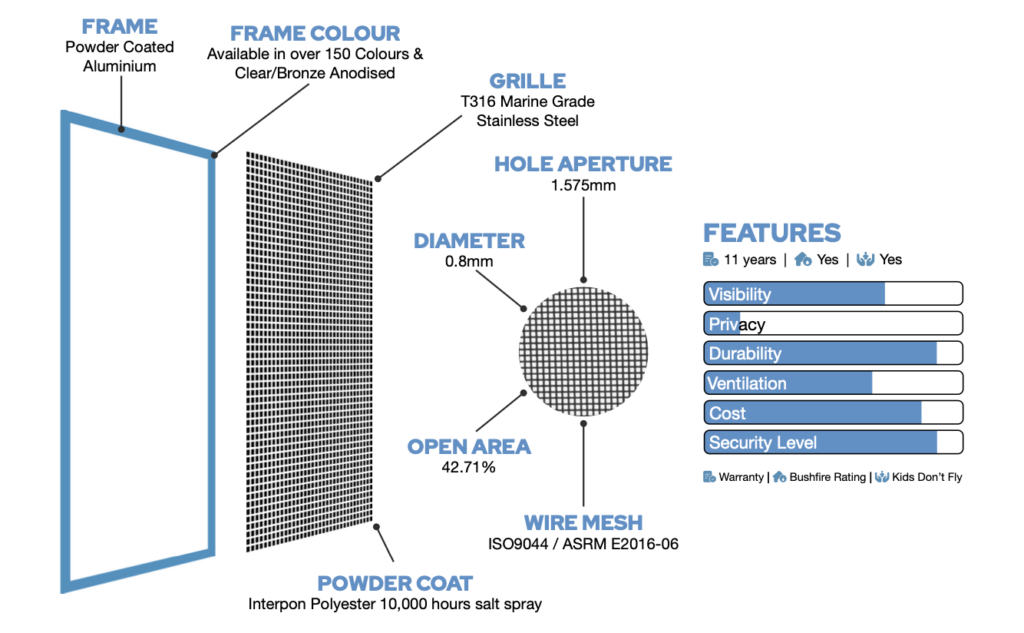
SecureView uses high-tensile 316 marine-grade stainless-steel mesh within a powder-coated aluminium frame. Its clean appearance and lack of visible screws or rivets make it a popular choice for front entries, sliding doors, stackers and windows.
Other options, including perforated-aluminium and traditional grille systems, may suit different budgets and design preferences. The important question is whether you require a genuine security-rated product or whether a well-made barrier screen will meet your needs.

Choosing Screens for Coastal Homes
Living near the coast requires more thought than simply choosing a product described as stainless steel.
Different grades of stainless steel have different levels of corrosion resistance. SecureView uses 316 marine-grade stainless-steel mesh, which is particularly well suited to Sunshine Coast conditions. For homes with greater exposure to salt air, surf spray or swimming-pool chemicals, we generally recommend the SecureView Saltwater Series.
The Saltwater Series is our main security-screen recommendation for exposed coastal properties because the complete system is designed with corrosion resistance in mind, not only the mesh.
Distance from the beach is not the only consideration. Wind direction, elevation, surrounding buildings and whether the opening is sheltered can all affect exposure. Two homes in the same suburb may require different recommendations.
Even corrosion-resistant products need regular cleaning. Salt deposits should not be allowed to build up on the mesh, frame, locks or hardware.
Why Three-Point or Triple Locks Matter
A lock should not be treated as an optional extra on a compliant security door.
Screens Plus security-rated doors are supplied with three-point locks as standard. These secure the door at the top, centre and bottom, making it much more difficult to lever the upper or lower section away from the frame.
We also recommend three-point locks on many lower-grade barrier doors because they can make a substantial practical difference to the strength and operation of the door, even though upgrading the lock does not turn a barrier product into an Australian Standards security screen.
The locking system must also engage smoothly. If the door has been poorly measured or installed, the locking points may not line up correctly. Customers can find themselves forcing the handle or key, which can damage the mechanism. In some cases, the door becomes so difficult to lock that the homeowner stops trying to use all the locking points.
A quality installation should allow the lock to engage reliably without excessive force.
How Many Hinges Should a Security Door Have?
The hinges support the weight of the door and form an important part of the complete security system.
Screens Plus normally fits three hinges to a standard 820 mm-wide hinged door. Wider doors require additional support: we use four hinges on a door approximately 1050 mm wide and five hinges on a door approximately 1250 mm wide.
The number of hinges should be appropriate for the width, weight and design of the door. The hinges must also be positioned correctly and secured with suitable fixings.
One problem we encounter on existing doors is screws that are too short to properly secure the hinges or lock strikes to the supporting structure. A neat-looking screw head does not show how much reliable fixing is behind it.

Check the Gaps Around a Hinged Door

A security door needs adequate operating clearance, but excessive gaps can affect its appearance, locking and overall performance.
Door openings are not always perfectly square. The installer must measure the opening carefully, assess the available fixing surfaces and allow the door to operate without leaving unnecessary gaps around the frame.
A door manufactured to an approximate size may still be possible to install, but “close enough” can make the installation more difficult and produce a poorer finished result. Correct sizing makes it easier to achieve consistent clearances and reliable lock engagement.
What to Look For on a Sliding Security Door
Sliding security doors require several less-visible components to work together properly.
A correctly fitted interlock
An interlock helps connect the closing edge of the security door with the adjoining glass-door frame or panel. It forms an important part of the security arrangement and helps prevent the screen door from being pulled away from its intended position.
Some existing sliding doors have no effective interlock at all.
Three-point locking
As with a hinged door, a three-point lock secures the sliding door at the top, centre and bottom. A single central lock leaves the upper and lower sections more vulnerable to movement or levering.
Top and bottom rollers
Rollers should support and guide the door so it travels smoothly and remains correctly positioned in the tracks.
Top rollers are particularly important in helping control upward movement. They need to be correctly adjusted and locked off after installation. We sometimes find sliding doors with no top rollers, or rollers that have been fitted but not locked into their final position.
Correct lock alignment
All locking points should line up and engage without forcing the mechanism. A door that drags, lifts excessively or sits out of position may become difficult to lock and can place unnecessary strain on the hardware.
Common Installation Problems Customers May Not Notice
Most homeowners understandably judge a new door by how it looks and whether it opens and closes. Important security details are not always obvious.
Some of the problems we encounter when inspecting existing installations include:
- excessive gaps around hinged doors;
- single-point locks where three-point locking would be more appropriate;
- hinge and strike screws that are too short;
- sliding doors without effective interlocks;
- missing top rollers;
- top rollers that have not been locked off;
- locking points that do not align correctly; and
- doors that must be lifted, pushed or forced before they will lock.
Customers are often surprised to learn that a door they believed was a compliant security door may not have been installed in a way that allows it to perform as intended.
This does not mean every older door is unsuitable. Standards, products and installation methods change over time. However, if a door is difficult to lock, has excessive movement or is missing important components, it is worth having it assessed.

Why Accurate Measuring Matters

Security doors are custom manufactured, so accurate measuring is one of the most important parts of the process.
At Screens Plus, we take time to examine the opening, clearances, fixing points, tracks, interlocks and the way the existing doors and windows operate. On more complex installations, we carry out a second check measure before ordering the product.
Customers appreciate a check measure because it shows that the details are being confirmed before the door is manufactured. It may add a little time at the beginning, but it helps avoid poor gaps, difficult installations and unnecessary callbacks later.
With industry experience dating back to 1988, we have seen how small measuring errors can create problems. A product can be close enough to force into an opening but still be far enough out to make proper installation unnecessarily difficult.
Our aim is to order the correct size and configuration, then install and adjust it so the finished screen looks right, operates smoothly and locks reliably.
Questions to Ask Before Accepting a Quote
Before choosing a security-screen supplier, consider asking:
- Is this an Australian Standards-tested security screen or a barrier screen?
- What security-level classification has the system achieved?
- Is three-point locking included?
- How many hinges will be used for this door size?
- How will the hinges and lock strikes be fixed?
- Will a sliding door include the correct interlock?
- Will top rollers be fitted, adjusted and locked off?
- Is the proposed system suitable for the property’s coastal exposure?
- Who will measure the opening?
- Who will complete the installation?
- Will a check measure be undertaken if the opening is unusual or complex?
A reputable supplier should be comfortable explaining these details in plain language.
The Right Screen Should Perform and Look Good
Security remains the priority, but it is not the only consideration.
A well-chosen security screen should complement the home, preserve views and airflow, and operate naturally as part of everyday life. The colour, frame style, mesh, lock and installation details should work together rather than looking like an afterthought.
For many Sunshine Coast homes, SecureView provides the balance customers are looking for: SL200-tested security, clear outward visibility, 316 marine-grade stainless-steel mesh and a clean contemporary appearance. For properties with greater coastal exposure, the Saltwater Series provides an additional level of consideration for the environment.
Other screen types can still be suitable depending on the opening, budget and level of protection required. The important thing is to understand what you are buying and ensure it is carefully measured and properly installed.

Need Help Choosing the Right Screen?

Screens Plus supplies and installs security screens and doors throughout the Sunshine Coast. The person who measures your project is also the person responsible for its installation, providing continuity from the initial advice through to the completed job.
You can receive an online estimate through our Instant Price system, or arrange a free measure and quote if you would like us to inspect the openings and recommend the most suitable option.
Frequently Asked Questions
Is SL200 the highest Australian Standards security classification?
SL200 is the current higher dynamic-impact classification under AS 5039. A system achieving SL200 must withstand five impacts of 200 joules while remaining secure in its frame. It must also pass the other applicable Australian Standards security tests.
Is a three-point lock necessary on a security door?
Screens Plus supplies three-point locks as standard on its compliant security doors. Locking at the top, centre and bottom helps prevent sections of the door from being levered away from the frame.
Is 316 stainless-steel mesh better near the ocean?
316 stainless steel has greater resistance to corrosion than commonly used 304 stainless steel, making it an appropriate choice for homes exposed to salt air. Product design, hardware, installation and regular cleaning also remain important.
How many hinges should a security door have?
A standard 820 mm door commonly uses three hinges. Wider or heavier doors may need additional hinges. Screens Plus uses four hinges at approximately 1050 mm wide and five at approximately 1250 mm wide.
Why is a sliding-door interlock important?
An interlock forms part of the connection between the sliding security door and the adjoining glass-door framing. A correctly specified and fitted interlock helps prevent the screen door from being pulled or forced away from its intended position.
Can a barrier screen be upgraded into a compliant security door by adding a triple lock?
No. A triple lock can substantially improve a barrier door, but the entire door system must be tested and compliant before it can be described as an Australian Standards security door.
What should I do if my security-door lock is becoming stiff?
Do not continue forcing the mechanism. Check that the door and locking points are properly aligned. For CommandeX triple-lock mechanisms, the manufacturer recommends silicone spray on the locking mechanism and graphite powder for a sticky key cylinder. Oil-based sprays and WD-40 should not be used.